
Like we all know, technical excellence in Cinema is the sum effect of all the departments under the leadership the director and his singular vision. Dealing with one craft at a time, often you wouldn’t have a sense of where you’re headed except for the conviction and the madness that drives you. Within this madness all the crafts either fuse into a beautiful rhythm or fizzle out miserably that makes or breaks a film narrative. 2019 for Telugu Cinema was loaded with enough of that madness. And a few filmmakers particularly pushed the envelope in different ways delivering some technically brilliant films. In my view, these films will remain historically significant and act as a reference in the future for their cinematic adventure.
Before I go to my main list, I want to talk about two films that invested a lot in their actors. As shared in my previous post, 2019 was a great year for the actors. Packaging within the technical finesse, these two filmmakers below pushed the spirit of ensembles by inspiring great performances from the cast and committed writing giving space to the characters to flourish.

- Nandini Reddy with Oh! Baby chooses to play within a scenario where a 70-year old woman gets a chance to live her youth again. Designed as a fun movie, with foot-tapping music, rich production values and near pitch-perfect performances, she etches out every character with unique quirks and personal quests. Veteran actress Lakshmi excels as the older Baby setting the tone and play field for Samantha to present the younger version of her. While I thought there was scope to become a Giulietta Masina like in La Strada and Nights of Cabiria, Samantha nevertheless pushes herself to navigate the range the character demands. After Kalyana Vaibhogame and this, Nandini has almost perfected her art of ensemble drama. With a keenness for comic writing and vulnerably quirky characters set in the aspirational middle class, Nandini will soon be looked at as the ensemble-queen who’s keeping the Vamsi-Jandhyala tradition of humour alive.
- Jeevan Kumar with George Reddy packs in a stylized period drama based on a real-life student leader who fights for the downtrodden until a tragic end. The camera never stops moving in this film. Neither does the music. In combination, they both set the pace to the film’s narrative as the story of the rebel student leader unfolds. All along this racy narrative, with more than thirty new faces, Jeevan plugs in fiery characters who deliver memorable performances – especially Thiruveer as Lalan. With a large canvas, sets and styling carrying the period look, these characters are made to be earthy and the life-like. And the richness of writing lies in making even the smallest of incidental characters come alive and noteworthy. Although the story material begged to be more political and contemporary, it will remain as a template reference for a period ensemble production. And Jeevan Kumar promises to pull off a story of such magnitude with ease.
Now coming to the filmmakers who pushed the envelope technically with some great collaborations across departments and delivered note-worthy cinematic experiences:
1) Vishwak Sen with Falaknuma Das
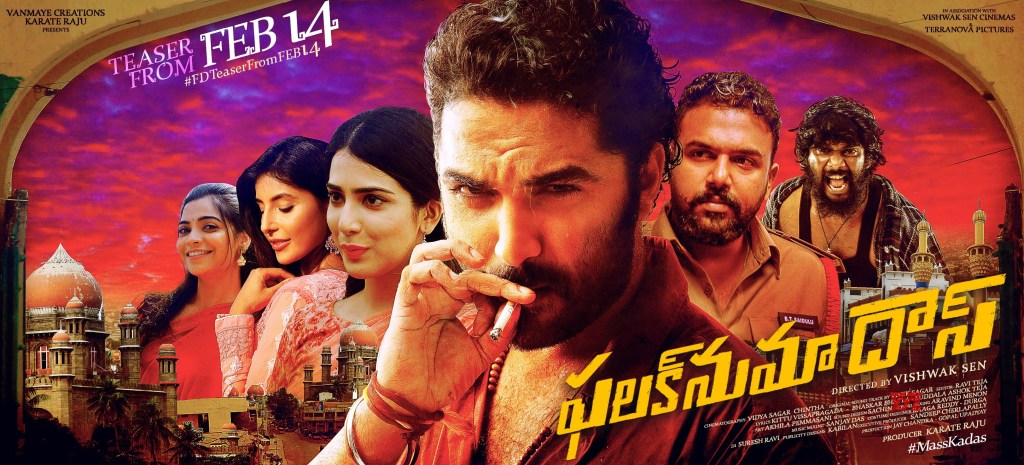
At 23, Vishwak Sen is like a Sachin making his debut with a test match with Pakistan. While the story and canvas of this film is epic in nature, like a test match, shooting in the noisy, crowded, chaotic narrow lanes of Old Hyderabad is as critical as a match with Pakistan. And with sync sound, anamorphic and long takes, the feat is almost unimaginable. No traditional studio would have ever produced a project like this. Besides being laborious and creatively challenging, only a mad conviction could deliver a film like Falaknuma Das. And Vishwak hits a sixer collaborating with an inspired team which delivered a cinematic experience that’s never seen before.
Vidya Sagar’s immersive cinematography, Ravi Teja’s fluttering rhythm and Vivek Sagar’s mood-setting score emphatically contribute to this experienced that’s never seen or felt before.
In every second Telugu film, Charminar is iconographically used to establish Hyderabad conveniently. Otherwise, old city, it’s life and the people who live there have only been seen as a broad-stroke backdrop or a Muslim ghetto. And the films that are totally set in that milieu have been sidelined as Deccani Cinema. This is where Falaknuma Das becomes only more important which blurs all boundaries and makes history celebrating the landscape and its people. Although I wanted to see Das’ rage graduate a little more from the fancy high school desire to start a gang, the film manages to capture a story of survival.
Vishwak Sen must continue directing films not just as a side-thing to his acting career, but as a Sachin who loves the cricket field. And this remake project should be seen as his net practice. There’s a lot of cinema that awaits to come out of his adventurous streak he seems to be driven by.
2) KVR Mahendra with Dorasani
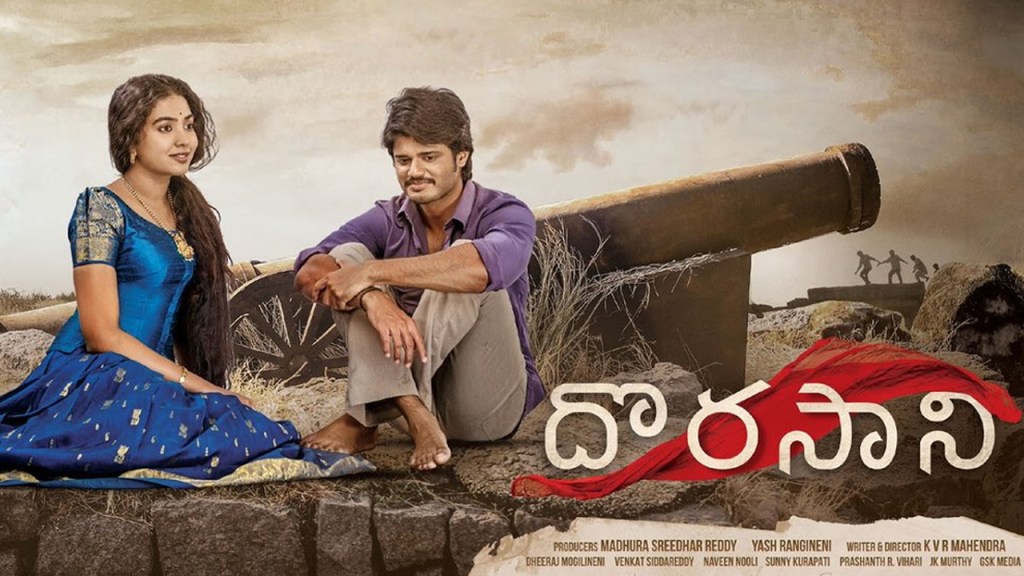
In the rustic garb of a rural Telangana love story, Dorasani is a confident musical. KVR Mahendra decidedly drives every department towards delivering a poetically moving tale of a boy and girl smitten by the love bug. Designing the story like an invincible Romeo-Juliet tale, keeping caste hierarchy as the class conflict, Mahendra consciously chooses the ‘dora gadi’ (feudal lord’s fortress) for all the romance that blossoms between the lovers. And we never saw such a romance on screen. Like I mentioned in my review during the film’s release, that’s what makes this film a historic moment in the emergence of Telangana Cinema
Prashanth R Vihari’s soulfully haunting music fuses into Sunny Kurapati’s gently captivating visuals. But it’s Naveen Nooli’s editing rhythm that keeps the beats of a musical that flow seamlessly with the story progression.
Again another film totally shot on location. Making the language and local rituals come alive with socio-cultural details of the times, the tone and texture of the films stays true to the landscape. Although set in a small village, the narrative intensity and canvas through its technical finesse. Mahendra manages to mine the best of performances with his entire set of actors with Shivatmika excelling the most. It will remain as one of the best debuts for any actor.
The untapped Telangana poetry and literature awaits KVR Mahendra if he continues to deliver such culturally rich as this film Dorasaani. And I look forward to his next, not just as a fellow filmmaker with similar aspirations but as a cinephile with admiration for his Cinema.
3) Vivek Athreya with Brochevarevarura
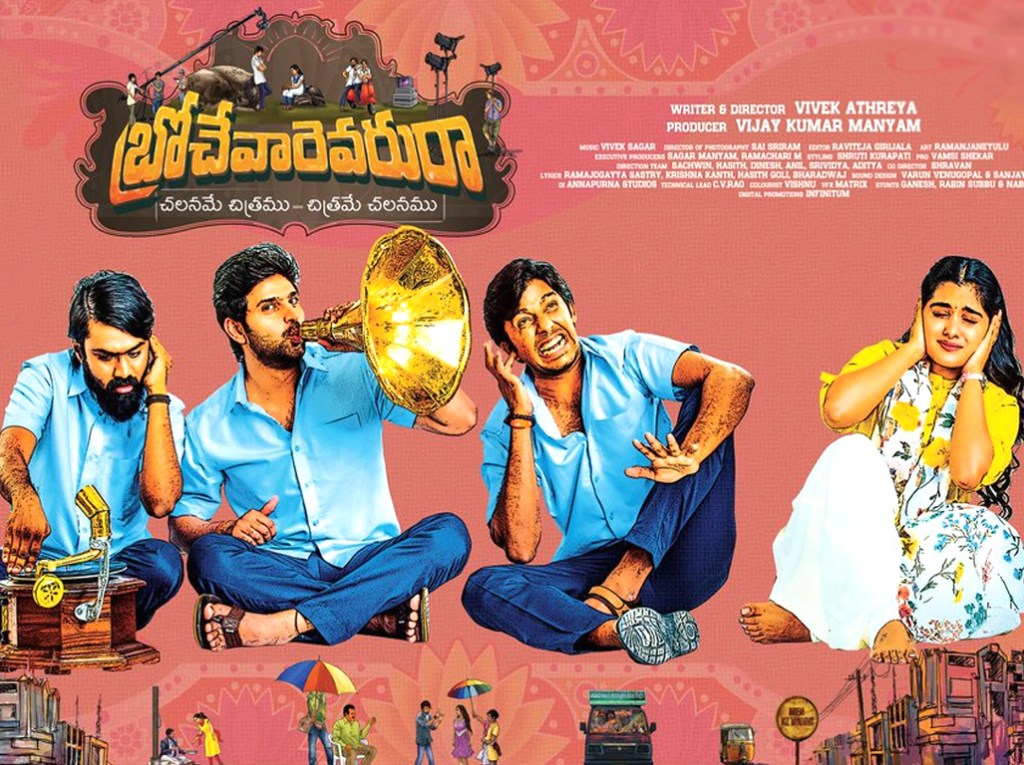
It’s not your usual straightforward story with a beginning, middle and an end. Neither is it a boy-meets-girl love story with duets. With a mad puzzling meta structure to the story, Brochevarevarura is a quirky comedy that celebrates the process of storytelling itself. For a formula-conditioned demanding Telugu audience, Vivek Athreya has managed to push them to give up linearity of storytelling and engage in what he has to show. And his biggest achievement is that nobody complained.
Vivek Sagar in collaboration with Athreya almost plays the sutradhar with his music in guiding the audience and making them guess the proceedings of the story. The entire soundtrack of the film is like one long jamming session seamlessly moving from one node to the other in the story.
At one level the film packs in a lot with questions around youth aspirations, ideas of being responsible, dysfunctional parents and sexual abuse. But it does so in an effortlessly empowering fashion that’s the triumph of writing – especially when you set it in the Telugu middleclass milieu. The charm of the film lies in the chemistry of four characters played by Sri Vishnu, Rahul Ramakrishna, Nivetha Thomas and Priyadarshi. Additionally the soundtrack of the film sets the tone and rhythm to the narrative that keeps the quirky quotient of the film with much celebration.
With such conviction in breaking traditional structures, Vivek’s storytelling has the promise to penetrate into story materials that are otherwise hard to convince a numb audience overfed with loud formulaic fare. And through his kind of writing, he could play God.
4) Raj R with Mallesham
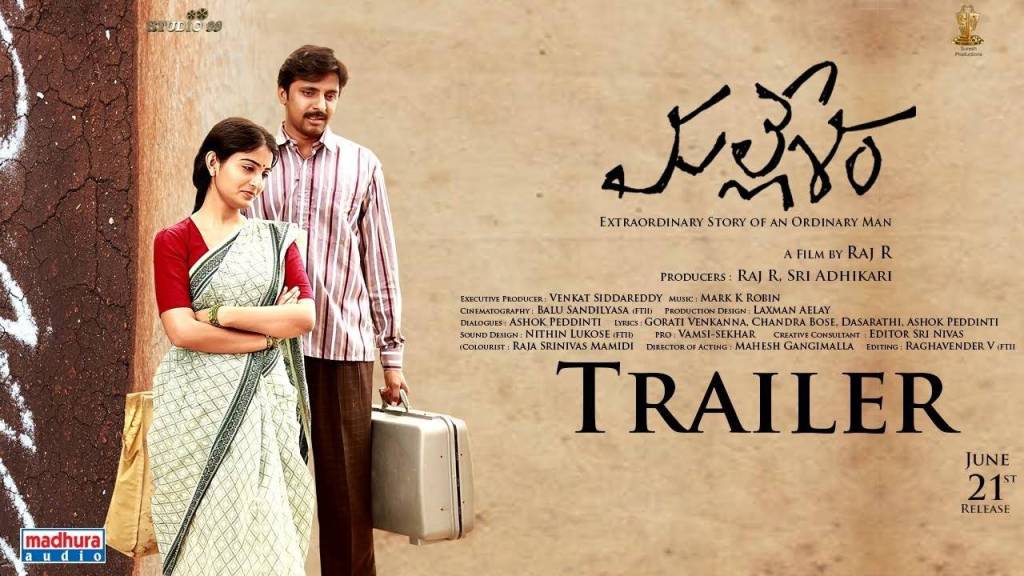
It will be great disservice to talk about this film just in terms of the usual parameters of apparent quality and technical finesse. Hence I place it at the end of this piece. Because with a filmschool-like discipline, Raj R says ‘no’ to all the traditional devices that are conveniently used in a mainstream film for easy storytelling and assured business. And doing it in a socio-cultural milieu that’s been ignored forever in Telugu Cinema, it’s a conviction that demands beyond passion.
Veteran painter Laxman Aelay’s production design captured through consciously toned down mise-en-scène by Balu Sandilyasa are an asset to the film’s vision. And Peddinti Ashok Kumar’s dialogues made the entire cast alive and convincing making them blossom with great performances – especially Ananya Nagalla about whom I’ve written enough already in my earlier posts. All this rendered the film a very earthy visual texture. So instead of the glitchy commercial film, you have a nuanced, culturally rich storytelling rooted in Telangana. Right from the colours, acting, long takes, sound design, pace, costumes, real locations, language – everything is totally geared towards delivering cinema rich in Telangana experience. Like I poured in at the time of the film’s release, with minor hiccups, Mallesham has ushered the Telangana idiom in popular cinema.
The film and the makers are yet to enjoy the attention it deserves. But with the film streaming on Netflix now, it’s slowly bound to reach wider appreciation. With a committed zeal, Raj promises to be the director-producer to look forward to who will uncompromisingly put together projects for rich storytelling.
2019: A watershed year in Telugu Cinema
With the films above and more in 2019, the studio-bound Telugu film industry will see a major shift in how their production planning is approached. Shooting in real locations, investing in sync sound, embracing non-actors might slowly become a norm. Songs will become narrative soundtracks. Films with Telangana landscape, language and culture will increase with more affirmation. Stories set in Bahujan universe away from the hybrid urban portrayals shall flood the screens. Together 2019 will be remembered as the watershed year for Telugu Cinema storytelling.
Copyright ©2020 Amarnath Sandipamu
 amarnaths.com
Hi Amar, as always, thanks a lot for your kind words which are encouraging. Will definitely try to live up to your expectations with the next film as well.
LikeLike